Enjoy wine with a cheerful heart and remember nature
with sustainably produced wines from fungus-resistant vines, so-called PIWI varieties
https://www.bonvinitas.com/media/reviews/photos/thumbnail/780x560c/f7/fc/5c/enjoy-wine-with-a-cheerful-heart-and-remember-nature-74-1774969830.jpg Enjoy wine with a cheerful heart and remember nature
PIWI varieties
The name comes from the German "fungus-resistant." These vines, due to their robustness, require significantly less pest control, which translates to far fewer pesticides and therefore considerably fewer tractor passes. This protects the soil, plants, and animals, reduces diesel consumption, lowers CO2 emissions, improves the ecological balance, and much more. Simply put, it's much more sustainable! Many PIWI wines feature the logo shown above on their labels, indicating that the wine was produced from robust PIWI varieties (the entire estate doesn't need to be certified organic).
And top PIWI wines:
Recently, the international PIWI association, comprised of winemakers, oenologists, scientists, and breeders, met for a symposium in Freiburg im Breisgau in Germany, where experiences and scientific findings were exchanged, and excellent wines made from PIWI varieties were available for tasting. I like to present some of these wines here, which I have evaluated according to the bonvinitas criteria. This, of course, represents my personal opinion. Although only brief, telegraphic-style ratings were possible, the following concise characterizations should be helpful. In principle, I only present wines that I enjoyed, scoring 90 points or higher. First up is a sparkling wine:
 For elegant openings
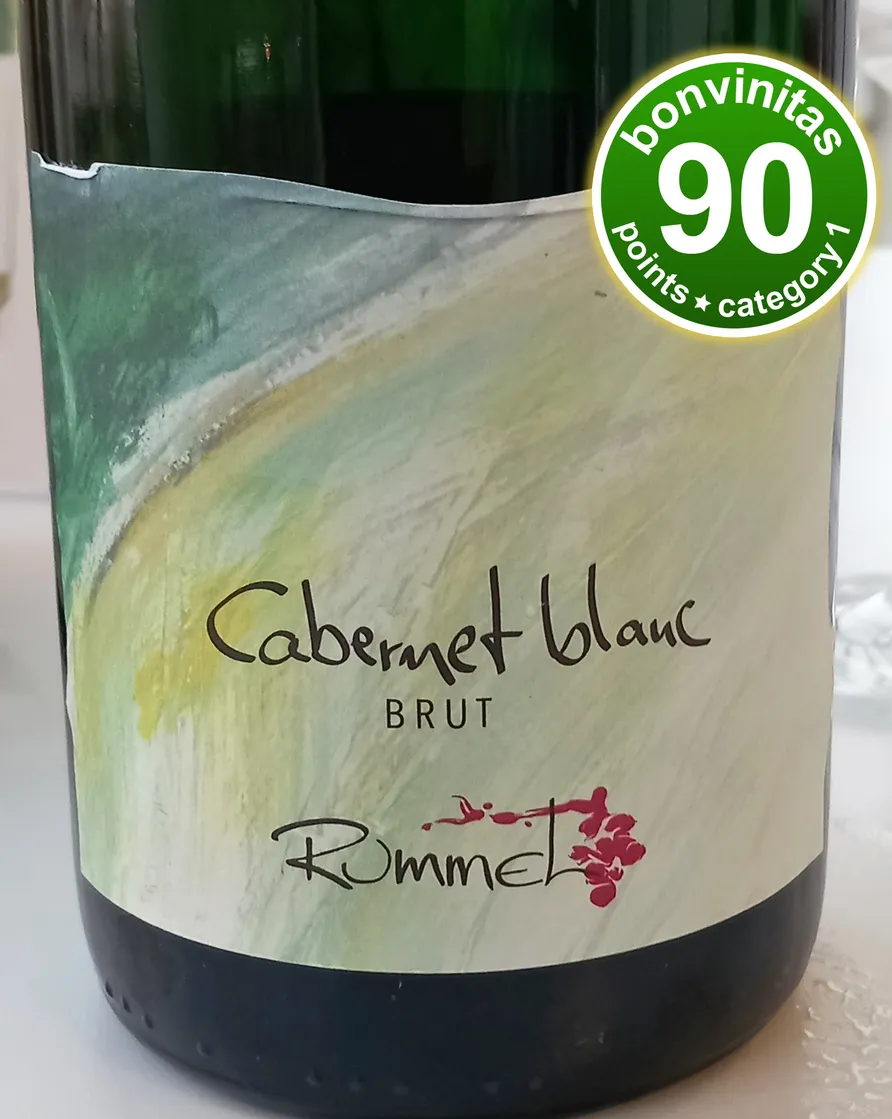
German sparkling wine, Cabernet Blanc brut, 12%, from the organic wine estate Rummel in Landau/Pfalz
I rated it 90 green bonvinitas points (green for drying up to 12% ABV): A very fine, elegant nose; fine mousse on the tongue, very elegant yet easy-drinking on the palate; leading to a very elegant finish. A beautiful example that proves how elegant sparkling wines made from PIWI varieties can be. Cabernet Blanc is a white PIWI variety bred by the Swiss Valentin Blattner.
 Very stimulating
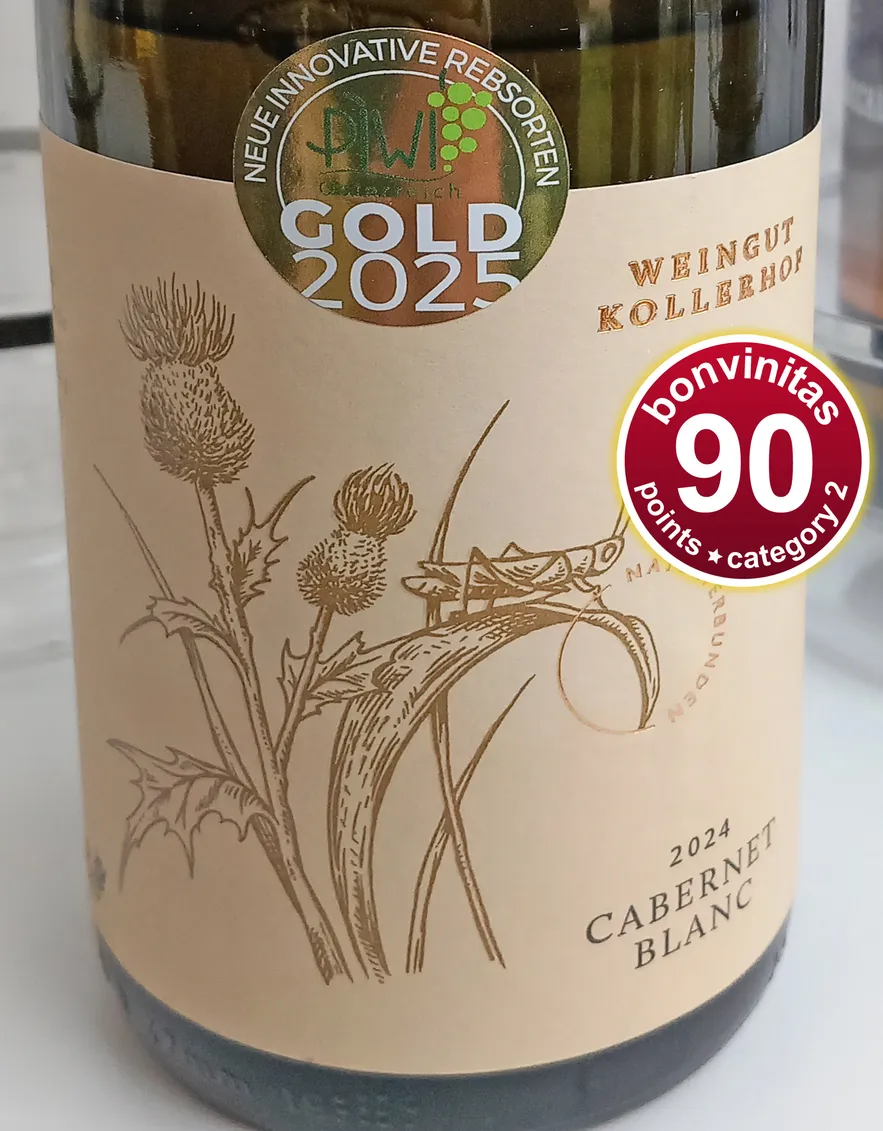
2024 Cabernet Blanc dry, wine from Austria, from the Kollerhof wine estate
13%, estate bottled by the Lieleg family in Leutasch/Styria, which I rated with 90 bonvinitas points (red for dry over 12%): Very entertaining vegetative notes already on the nose; on the tongue a unique, firm floral language; powerful, spirited finish.
More details about PIWIs in the meantime.
The background to this is that two harmful fungi from the New World, powdery and downy mildew, were introduced as early as the 19th century. Unfortunately, our popular European grape varieties are highly susceptible and not very robust against these diseases, requiring extensive fungicide control. Thus, over 100 years ago, the idea arose to cross our vines with varieties from the New World to obtain more robust grapes. The result are the PIWI varieties. Breeding these varieties was and still is often carried out by state research institutions and is an immense undertaking. It requires countless trials and selections, accompanied by experimental winemaking. Tasting, tasting, tasting! It takes 15 to 20 years for a variety to reach the top tier, so to speak, and find its way onto wine shelves – a feat achieved, of course, only by the very best. Meanwhile, winemakers have also gained considerable experience with PIWI varieties and can now offer a lot of excellent wines.
Today, research institutions are even examining the genes of grapevines to increase the number of resistance genes from the parents, particularly against the aforementioned fungi, in the offspring of new crosses. The international PIWI association is well-connected and comprises over 1,000 members in 31 countries; the aforementioned international symposium took place under its auspices. There were some very interesting presentations, but going into detail would go beyond the scope of this report.
 Excellent red wine
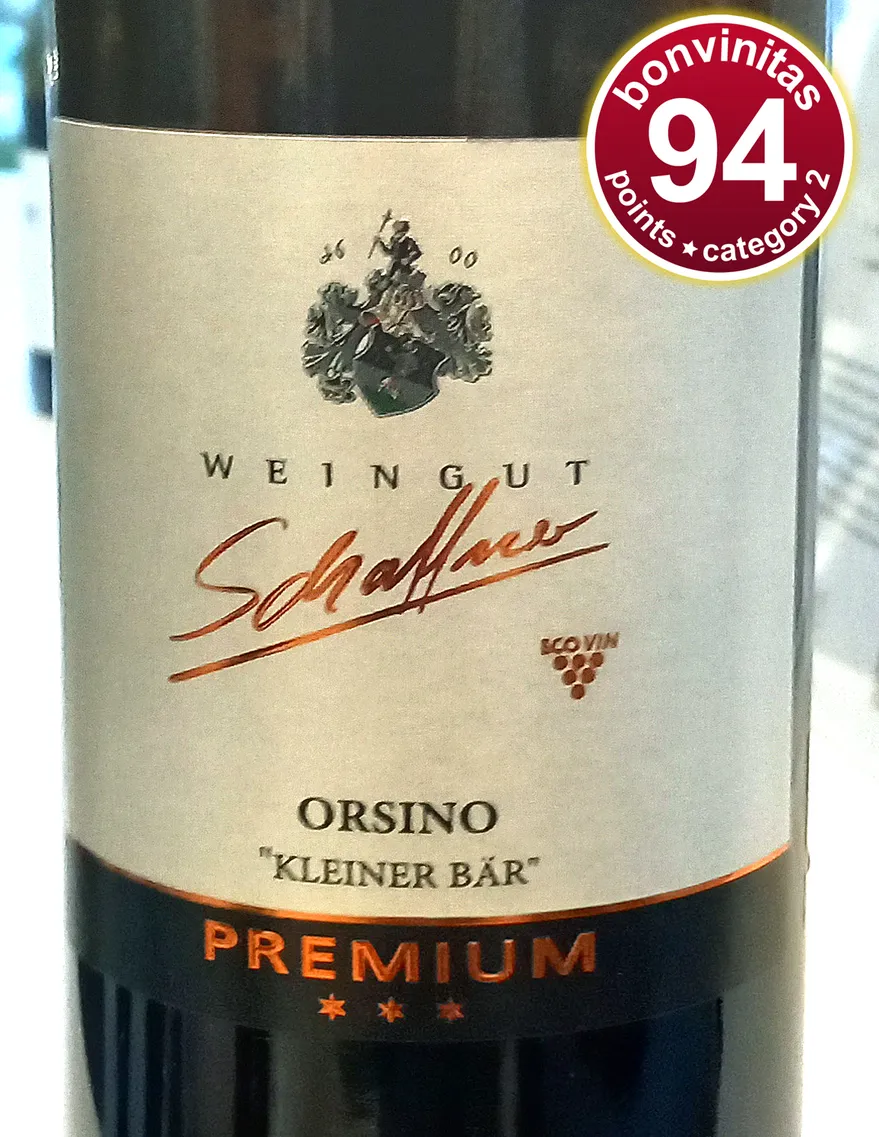
2021 “Orsino – Little Bear” dry red wine cuvée, Baden regional wine from the Schaffner organic wine estate
In Bötzingen at Kaiserstuhl, 12.5%, rated with 94 red bonvinitas points: Deep nose with notes of blackberries, cassis, nougat; on the palate wonderful fruit, lots of substance; very appealing fruity finish, from which fine tannins emerge.
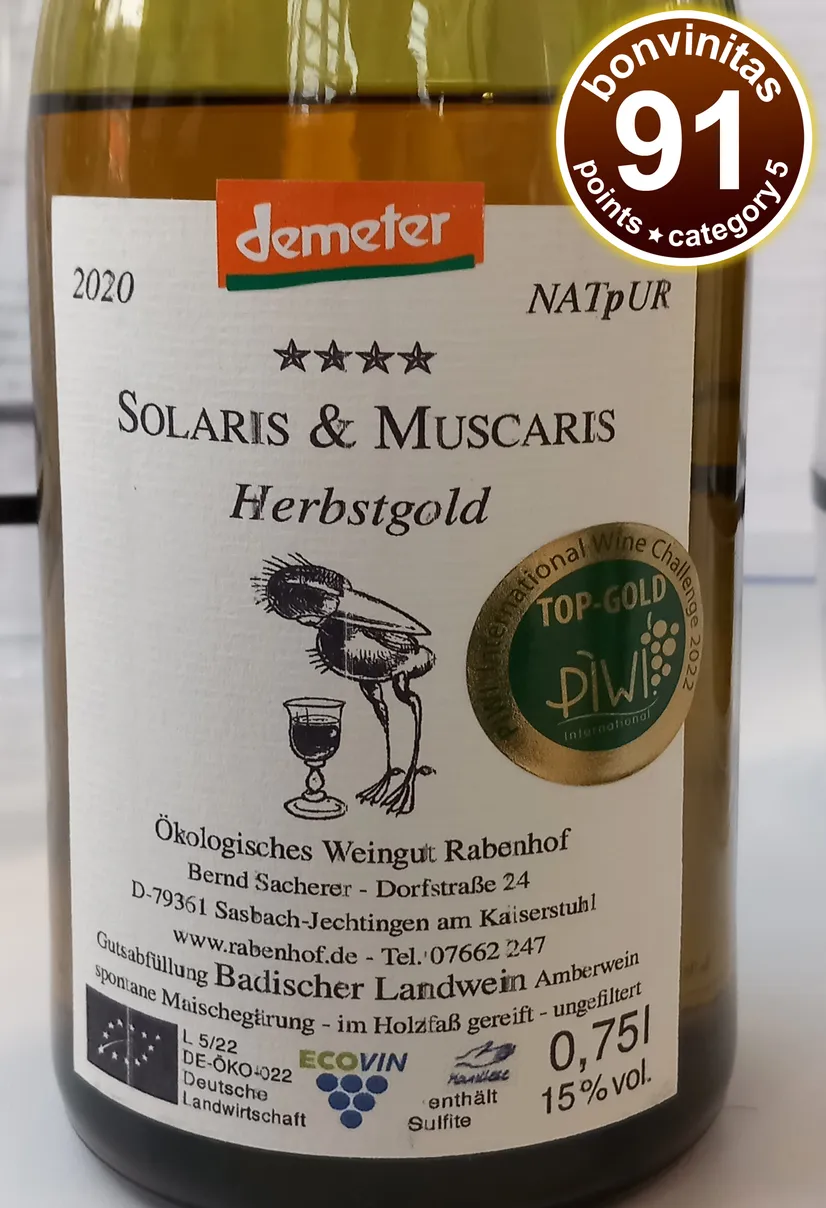 Lots of nature – lots of substance: an orange or natural wine
2020 Solaris & Muscaris “Herbstgold” Baden regional wine, 15%, organic wine estate Rabenhof
Bernd Sacherer is running the winery in Sasbach-Jechtingen in the Kaiserstuhl region. This is a golden-red orange/natural wine, produced using fermentation on skins without any treatment and aged in oak barrels. It's a highly interesting wine, which I rated with 91 earth-toned points, category 5: The nose is very elegant and delicate, reminiscent of a flower meadow; on the palate, it's bone dry with a strong backbone and interesting bitter notes that continue into the finish, building to a multi-layered complexity. Solaris and Muscaris are two white PIWI varieties developed at the State Viticultural Institute in Freiburg.
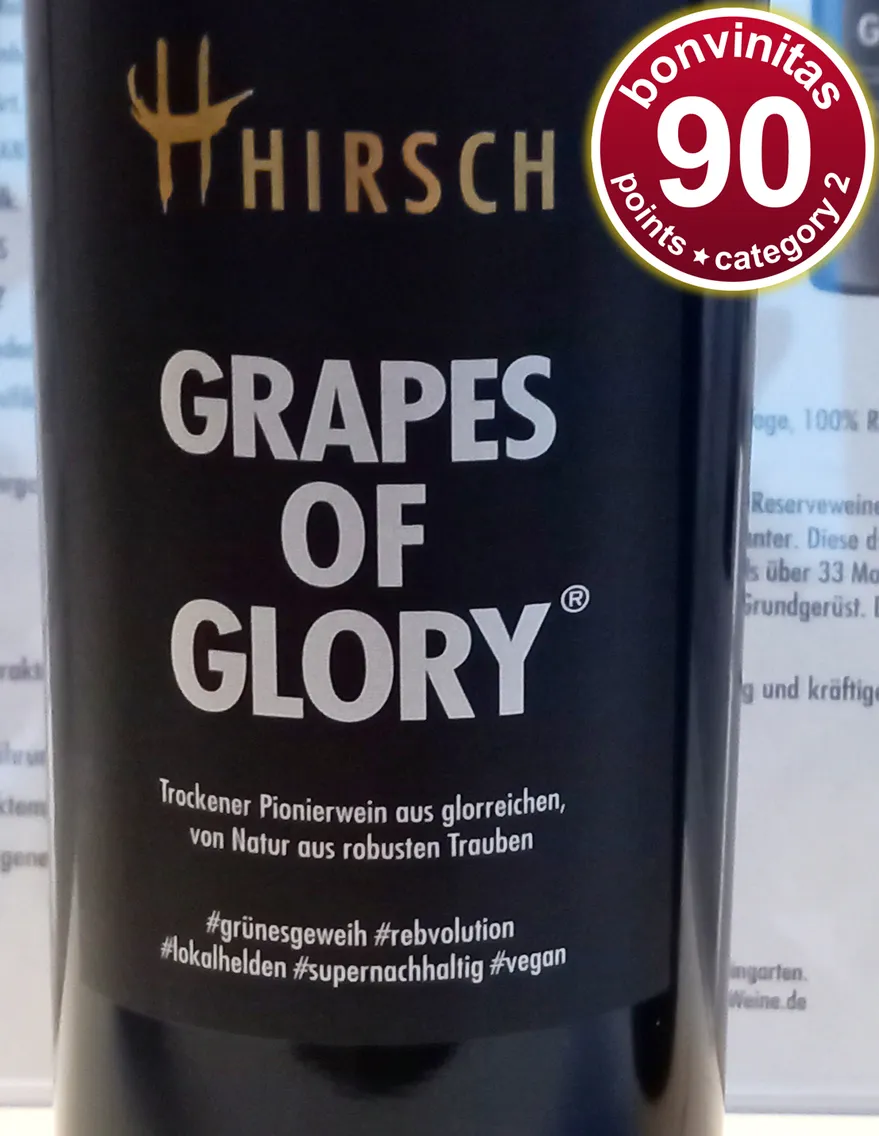 Fine red wine for connoisseurs
Grapes of Glory” by Christian Hirsch Wines, Satin Noir and Cabernet Cortis
Dry, Qualitätswein (quality wine) from Württemberg, 14% ABV. Hirsch-in Leingarten-designates the vintage as "Aged Reserve". 90 bonvinitas points! Deep nose with notes of charcoal, vanilla, and a hint of dark chocolate; powerful and captivatingly dry on the palate; substantial finish. Satin Noir is a red PIWI variety from Blattner, while the red PIWI variety Cabernet Cortis comes from the State Viticultural Institute in Freiburg.
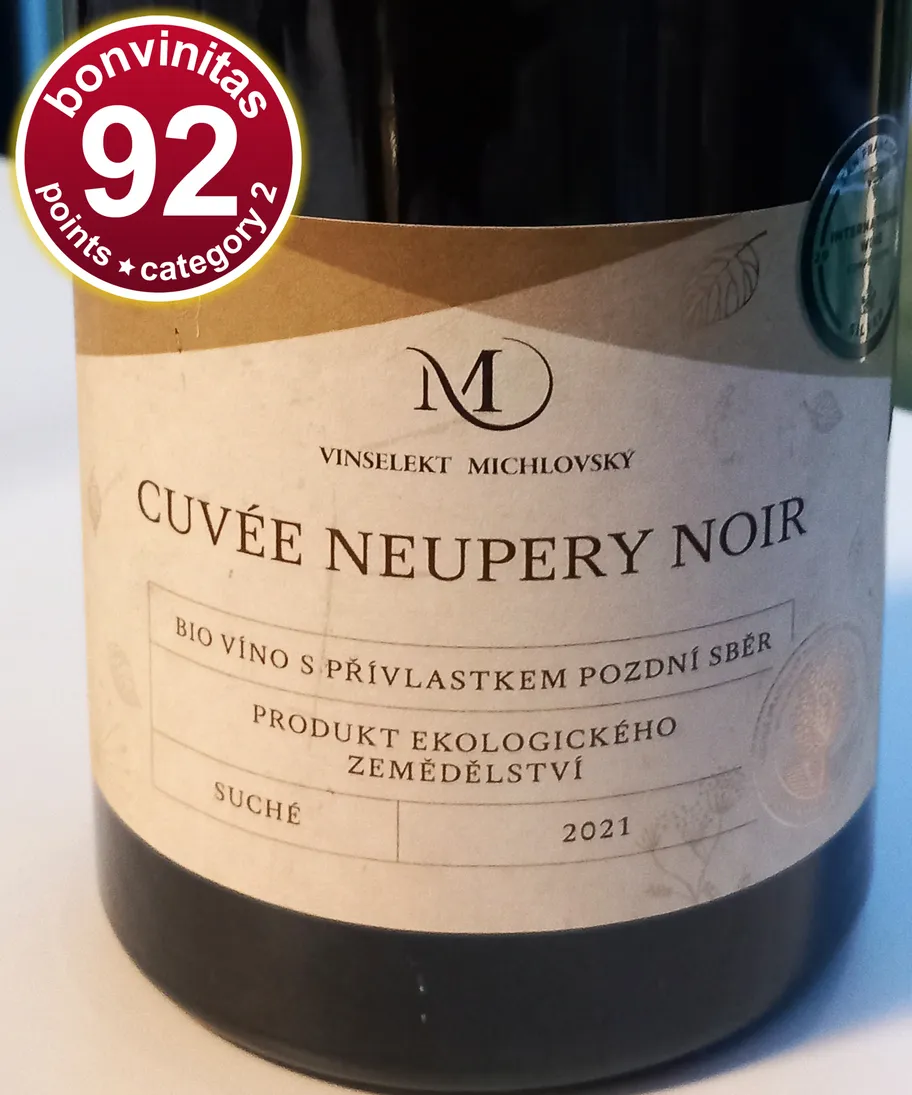 Fine red wine
2021 Cuvée Neupery Noir, late harvest red wine from Moravia, Vinselekt Michlovsky
13.5%, dry. 92 bonvinitas points: Very pleasant aroma of cherry compote and dark chocolate; a full-bodied red wine on the palate; a long finish that you'd like to linger over.
Full-bodied Tamino
With Tamino, the state of Baden-Württemberg, represented by the Staaliches Weinbaunstitut Freiburg, has created a brand for full-bodied red wines made from PIWI grape varieties. Currently, 15 wineries participate, offering corresponding cuvées. Tamino originally means "completion" or "perfection." All wines displaying the distinctive "T" in a circle on the label are therefore identified as full-bodied Tamino wines. Two fine examples:
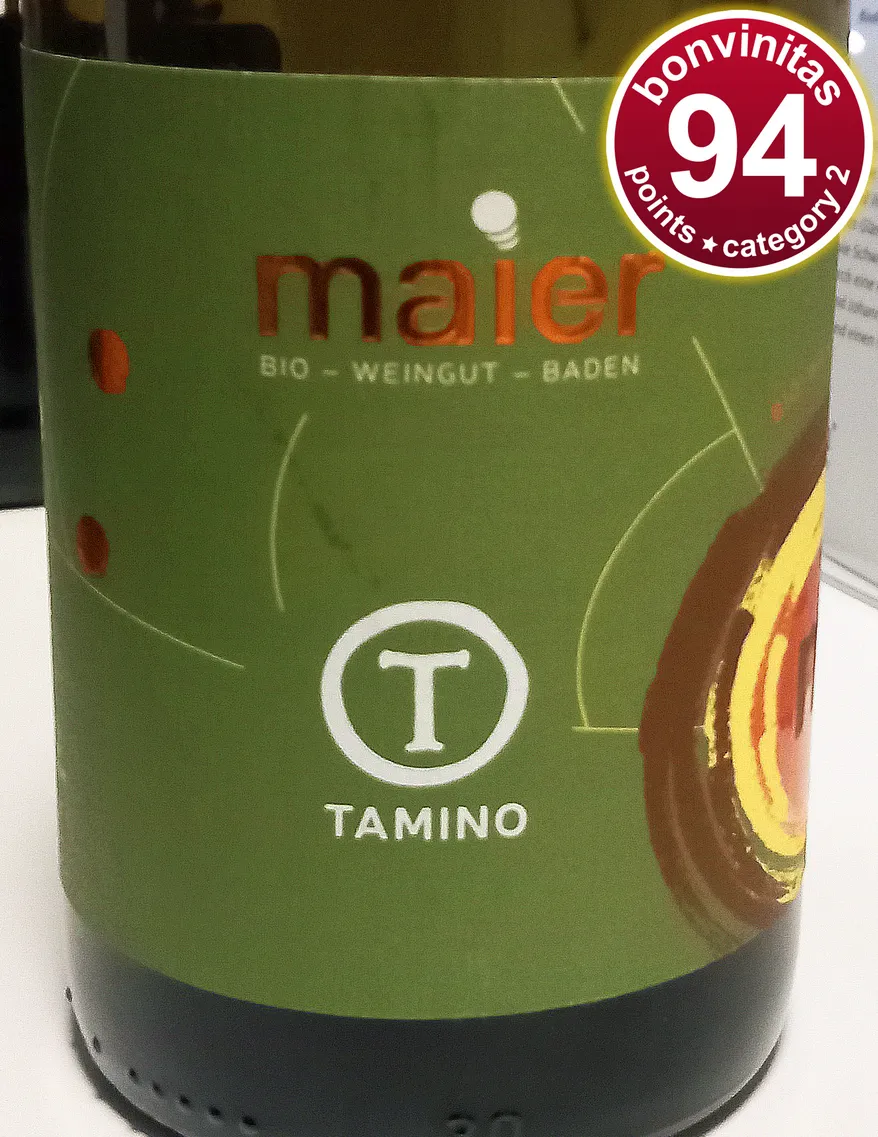 2020 “Tamino” red wine cuvée, quality wine Baden from the organic wine estate Maier in Baden-Baden
13%. Even on the nose, a very round, fruity red wine with notes of sour cherry compote, nougat, and a hint of toast; on the palate, very approachable, round, and very full-bodied; full finish – 94 bonvinitas points!
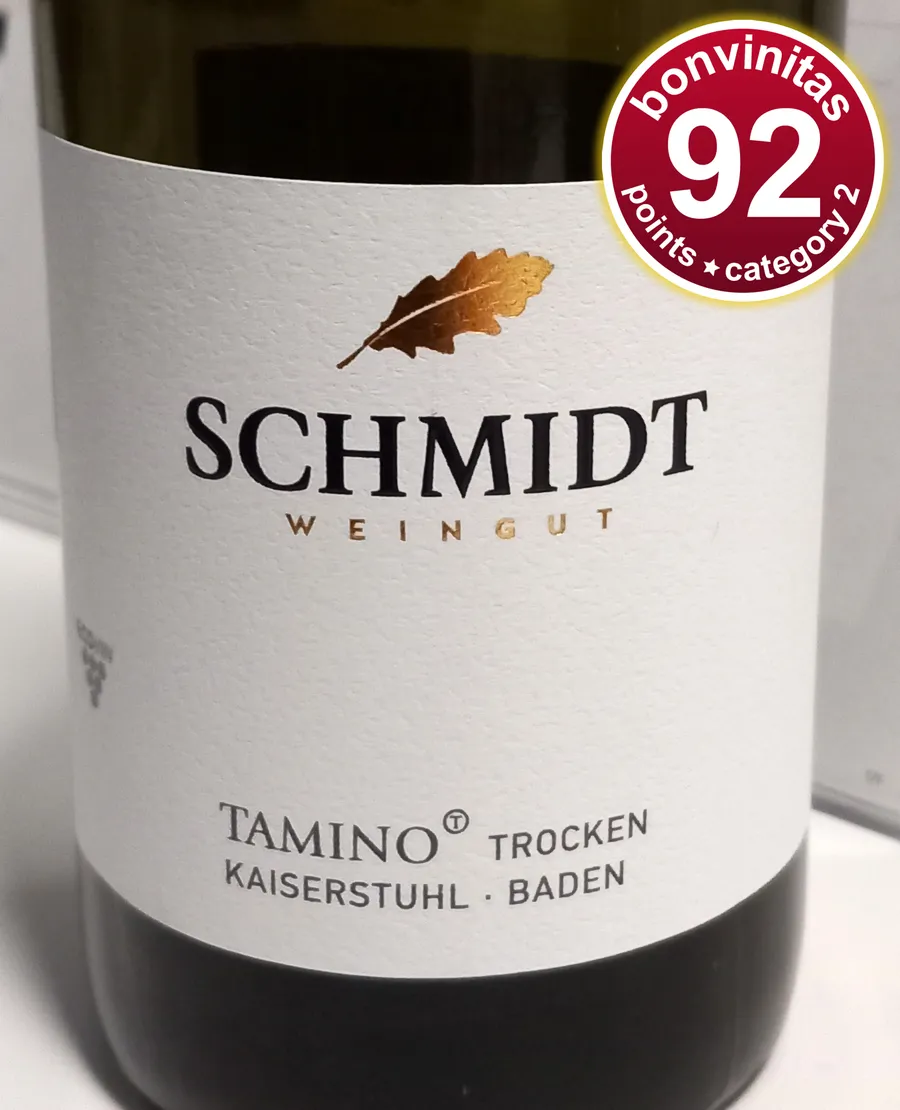 “Tamino” red wine cuvée, dry, quality wine Baden, 13.5%, wine estate Schmidt
A delicate fruity bouquet, a full-bodied wine: culminating in a powerful finish – 92 bonvinitas points.
Juicy, off-dry rosé.
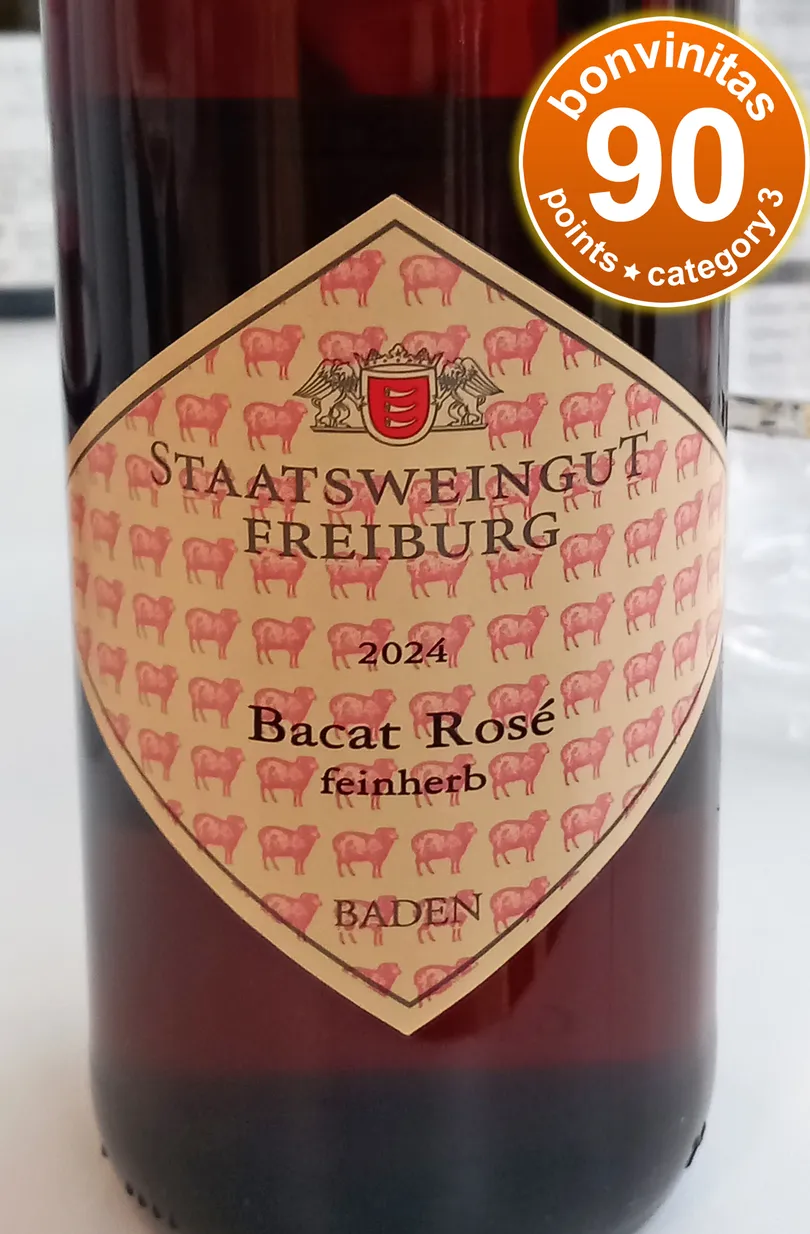 2024 “Bacat” Rosé, off-dry, 12%, Qualitätswein Baden, from the Freiburg Staatsweingut
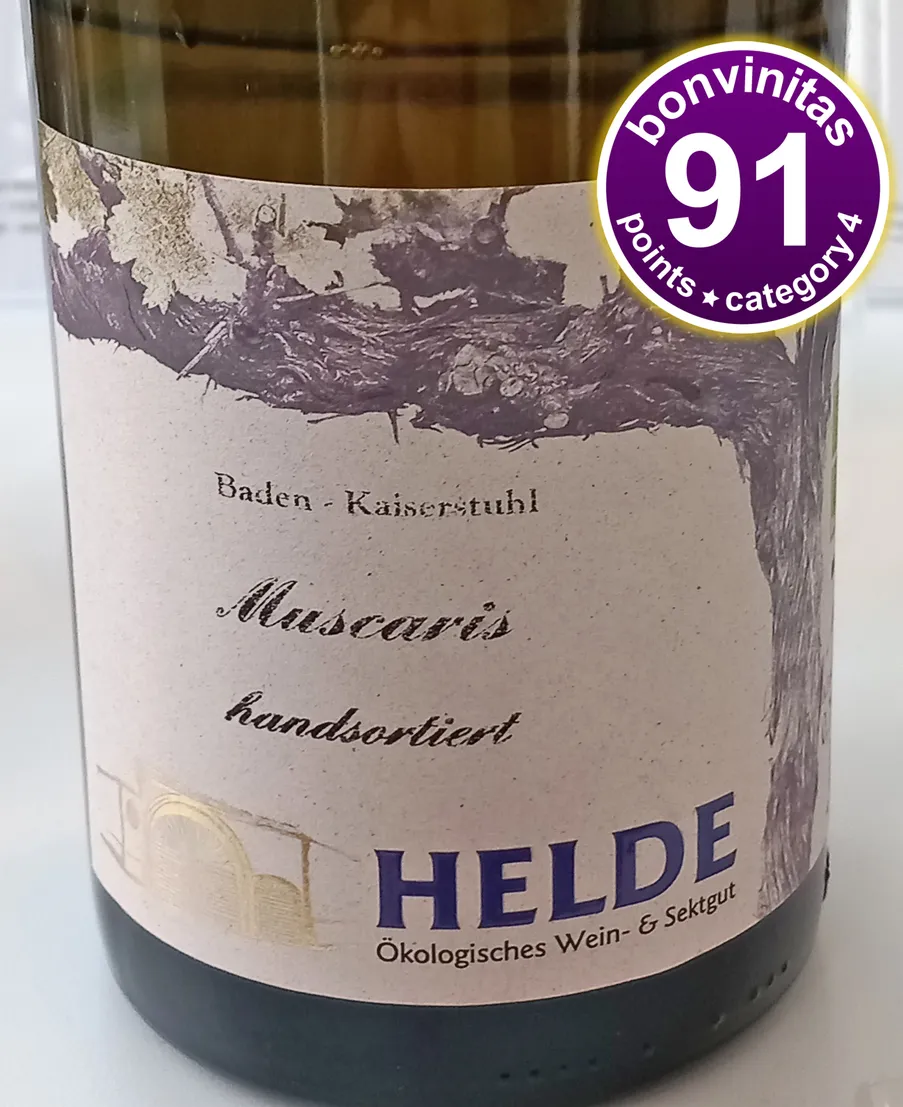
2022 Muscaris “hand-sorted” Auslese lusciously sweet from the organic wine and sparkling wine estate Helde
In Sasbach-Jechtingen at Kaiserstuhl. Jechtinger Hochberg, German Prädikat wine Baden, 14%, which I rated with 91 violet (for natural sweet) bonvinitas points: On the nose floral, expansive with honey notes; on the palate lots of fruit and depth with appealing sweetness; in the finish firm, compact.
And it continues merrily on:
“Carillon” wood from the Staaliches Weinbauinstitut from experimental breeding, 2022 FR 628-2005r,
A very promising red PIWI cuvée from newly bred grape varieties for experimental purposes: Deep aromas of blueberry jam and blackcurrant; full-bodied, subtly floral; very harmonious finish: 93 bonvinitas points .
Text: Dieter Simon, Publisher and Editor-in-Chief of bonvinitas. Bottle photos: bonvinitas. Cover photo of vines: © franky2010 – Adobestock; Drinking wine: © Robert Kneschke - Adobestock


